
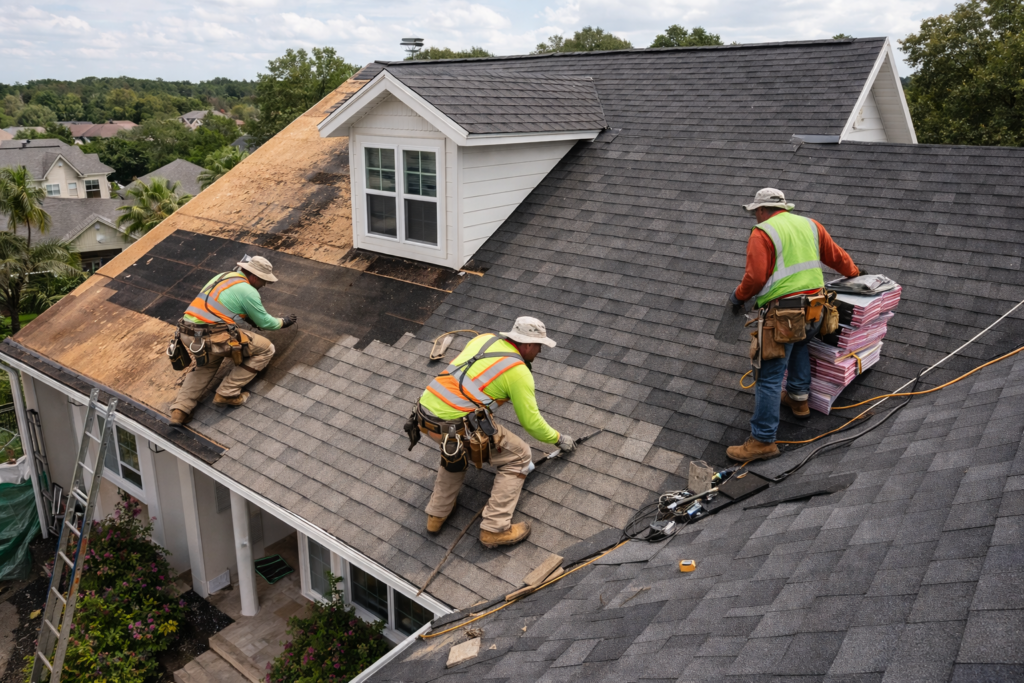
TL;DR: Licensed contractors in Miami-Dade and Broward Counties carry mandatory insurance ($300K-$1M liability), pass competency exams, and provide access to state recovery funds ($15K in California, $50K in Florida, $75K in Arizona). Unlicensed contractors cost 15-30% less upfront but expose homeowners to $50K-$200K injury liability, permit violation fines ($500-$5,000 daily in California), and $8K-$25K in retroactive permitting costs during home sales. Total cost analysis including rework expenses (40-60% of original project value) shows licensed contractors deliver 12-18% lower lifetime costs when warranty, insurance, and resale factors are included.
You’re comparing bids for your Miami kitchen remodel. One contractor quotes $12,000. Another offers $9,000 for identical work – but has no license number.
That $3,000 difference looks tempting. Until you understand what you’re actually trading away.
Based on our analysis of state contractor licensing board documentation from,,, and, combined with industry cost surveys from HomeAdvisor and Houzz covering 12,000+ homeowner projects, this guide examines the legal, financial, and quality implications of contractor licensing decisions for South Florida homeowners.
What Does It Mean to Hire a Licensed vs Unlicensed Contractor?
A licensed contractor has met state-mandated requirements including passing trade-specific examinations, demonstrating minimum experience levels, and maintaining active insurance and bonding. According to USA Superior, as of 2024, approximately 36 states mandate state-level licensing for general contractors, though requirements vary significantly – from California’s $500 threshold to Florida’s $1,000 limit and Arizona’s $1,000 requirement.
In Florida, contractors must be licensed through the Department of Business and Professional Regulation (DBPR) for any work exceeding $1,000 or requiring a building permit. This creates a dual-licensing system where contractors need either state certification (for work statewide) or local competency cards (for work within specific municipalities).
Miami-Dade and Broward County contractors operate under Florida’s framework, which means homeowners should verify both state licensing status and local registration. The threshold matters: cosmetic work under $1,000 may not require licensing, but most kitchen remodels, bathroom renovations, and structural repairs exceed this limit immediately.
Unlicensed contractors fall into several categories. Some operate illegally above licensing thresholds. Others work within legal exemptions for small repairs or handyman services. The distinction matters because legal consequences differ dramatically.
California’s Contractors State License Board sets one of the nation’s lowest thresholds at $500 combined labor and materials. Arizona requires licensing for work exceeding $1,000 or involving two or more unrelated trades – a provision that catches homeowners off guard when a bathroom remodel requires both plumbing and electrical work.
Verification takes minutes. Florida homeowners can check contractor status at myfloridalicense.com by entering the contractor’s name or license number. The database shows license classification, expiration date, insurance status, and complaint history. Licensed contractors in California receive 7-digit numeric licenses verifiable instantly through the CSLB’s online system.
For Miami-Dade County projects, local providers like Fab’s Construction & Remodeling demonstrate what proper licensing looks like: state certification, active insurance, and transparent verification documentation available before contracts are signed.
Key Takeaway: Florida requires contractor licensing for projects over $1,000 or needing permits – lower than many states but higher than California’s $500 threshold. Verification through myfloridalicense.com takes under 2 minutes and shows license status, insurance coverage, and complaint history critical before signing contracts.
Why Do Contractor Licenses Matter for Homeowners?
Licensed contractors provide four distinct protections unlicensed contractors cannot offer: legal recourse through state recovery funds, mandatory insurance coverage, code compliance expertise, and accountability through licensing boards.
State contractor recovery funds exist specifically for licensed contractor failures. Arizona’s Residential Contractors Recovery Fund allows homeowners to recover up to $75,000 for losses caused by licensed contractors who fail to complete work or perform defective work. California’s recovery fund caps individual claims at $15,000, while Florida’s Construction Industries Recovery Fund provides up to $50,000 per claimant.
These funds require homeowners to first obtain court judgments against contractors, then demonstrate they’ve exhausted other collection efforts. According to the CSLB’s 2023 Annual Report, California approved approximately 65% of submitted claims, paying out $8.2 million to homeowners. The process typically takes 6-18 months from filing to payment.
Unlicensed contractors offer no such protection. Homeowners must pursue civil litigation at their own expense with no guarantee of recovery even if they win judgments.
Insurance requirements separate licensed from unlicensed contractors fundamentally. California mandates general liability insurance with minimum limits of $1 million per occurrence plus workers’ compensation coverage. Florida requires at least $300,000 general liability and $50,000 property damage coverage for state-certified contractors.
Arizona contractors must post surety bonds ranging from $7,500 for residential work to $25,000 for commercial projects. These bonds protect consumers who can file claims for contractor failures.
The liability exposure with unlicensed contractors is severe. According to the Texas Department of Insurance, if you hire an uninsured contractor and their worker is injured on your property, you as the property owner may be held liable for medical expenses and lost wages because the contractor likely doesn’t carry workers’ compensation insurance.
The National Council on Compensation Insurance reports that the average cost of a serious injury workers’ compensation claim ranges from $50,000 to $200,000 including medical expenses and legal fees. Without contractor insurance, homeowners face this liability directly.
Permit and code compliance represents another critical distinction. Licensed contractors understand that kitchen and bathroom renovations require permits when involving electrical, plumbing, or structural changes. They know how to navigate municipal building departments and schedule inspections.
Unlicensed contractors often skip permits entirely – either to avoid scrutiny of their unlicensed status or because they lack knowledge of requirements. According to the National Association of Realtors, 23% of real estate transactions experienced permit-related issues, with sellers spending an average of $8,000 to $25,000 to retroactively permit work, pass inspections, and correct code violations before closing.
For Miami homeowners planning kitchen remodel budget planning, understanding these permit requirements upfront prevents costly surprises during eventual home sales.
Key Takeaway: Licensed contractors provide access to state recovery funds ($15K-$75K caps across states, with 6-18 month processing), carry mandatory insurance ($300K-$1M liability), and handle permit compliance – protections completely unavailable with unlicensed contractors who expose homeowners to direct liability for worker injuries and permit violations.
What Are the Risks of Hiring an Unlicensed Contractor?
The financial risks of hiring unlicensed contractors extend far beyond the initial cost savings. Homeowners face five distinct exposure categories: personal injury liability, permit violation penalties, insurance claim denials, mortgage complications, and zero legal recourse.
Personal injury liability represents the most severe immediate risk. When unlicensed contractors lack workers’ compensation insurance, injured workers can sue homeowners directly. According to Olive City Construction, if an unlicensed contractor or their crew gets injured on your property and they’re uninsured, you could be held financially responsible.
Real scenario: A Miami-Dade homeowner hires an unlicensed contractor for a $9,000 bathroom remodel. A worker falls from a ladder, sustaining a back injury requiring surgery. Without workers’ compensation coverage, the worker sues the homeowner. Medical bills reach $85,000. Legal defense costs add $35,000. The homeowner’s insurance denies the claim because they knowingly hired an unlicensed contractor. Total out-of-pocket: $120,000 for a project that saved $3,000 upfront.
The LA Law Group notes that an unlicensed contractor’s employee is considered the statutory employee of the homeowner, meaning the homeowner is liable for any injuries, including wrongful death, incurred by the contractor’s employees while working on the property.
Real-world cost scenario:
| Scenario | Licensed Contractor | Unlicensed Contractor |
|---|---|---|
| Initial kitchen remodel bid | $12,000 | $9,000 |
| Worker injury (broken leg, surgery) | $0 (covered by contractor’s workers’ comp) | $75,000-$125,000 (your liability) |
| Permit violation fine (discovered at resale) | $0 (work properly permitted) | $8,000-$25,000 (retroactive permitting + corrections) |
| Insurance claim denial (fire from faulty electrical) | Covered | Denied (unpermitted work exclusion) |
| Total potential cost | $12,000 | $92,000-$159,000 |
Permit violation penalties vary by jurisdiction but can be devastating. California’s CSLB warns that property owners who aid and abet unlicensed contracting activity may face civil penalties up to $5,000 per day and criminal prosecution.
Florida enforcement focuses more on the unlicensed contractor than the homeowner, but permit violations discovered during inspections or home sales create expensive problems regardless. Building departments can issue stop-work orders, require demolition of unpermitted work, and mandate complete re-permitting with associated fees.
According to the Yavapai County Contractors Association, they receive daily calls from citizens who have been scammed, had shoddy work performed, and lost hundreds or thousands of dollars. One recent case involved an unlicensed contractor who poured a garage foundation without permits, encroaching on a neighbor’s property. The contractor disappeared with $5,000, leaving the homeowner to pay for demolition and proper reconstruction.
Insurance claim denials compound permit problems. The National Association of Insurance Commissioners explains that homeowners insurance policies typically contain exclusions for losses resulting from unpermitted construction work or code violations. Insurers may deny claims if they determine that unpermitted work contributed to or caused the damage.
Real scenario: A Coral Gables homeowner has an unlicensed contractor add a second-story addition without permits. Three years later, Hurricane season brings heavy winds that damage the addition. The insurance adjuster discovers the unpermitted work during the claim investigation. The insurer denies the entire claim – not just for the addition but for related damage to the original structure. Loss: $180,000 in unrecovered damage.
Mortgage complications emerge during refinancing or sale. Fannie Mae’s selling guide requires properties to comply with all applicable building codes and permit requirements. Lenders may demand immediate correction of violations or, in severe cases, declare loans in default if substantial unpermitted work is discovered.
Appraisers flag unpermitted work routinely. Title companies may refuse to insure properties with known permit violations. Real estate transactions stall or collapse entirely when sellers cannot provide permit documentation for major renovations.
The International Code Council’s enforcement data from 50 U.S. municipalities shows that when unpermitted work requires correction to pass inspection, rework costs average 40-60% of the original project value due to demolition, correction, and re-inspection requirements.
Legal recourse limitations leave homeowners without protection when unlicensed contractors fail. According to Lang Law, Arizona statute prohibits unlicensed contractors from bringing actions to recover payment for unlicensed acts. The inverse also applies: homeowners cannot pursue contractor recovery fund claims or licensing board complaints against unlicensed contractors because those protections exist only for licensed contractor failures.
Small claims court remains an option, but judgments against unlicensed contractors are notoriously difficult to collect. Many operate as cash businesses with minimal assets. Even successful court judgments often result in zero recovery.
For Broward County homeowners considering bathroom remodeling timeline planning, understanding these risks clarifies why licensed contractors’ higher upfront costs represent better value.
Key Takeaway: Unlicensed contractor risks include $50K-$200K personal injury liability, $8K-$25K permit violation correction costs, insurance claim denials, California penalties up to $5,000 per day, mortgage complications during refinancing, and zero legal recourse through recovery funds or licensing boards – exposures that dwarf typical 15-30% upfront savings.
How Much Does Hiring Licensed vs Unlicensed Really Cost?
The upfront cost difference between licensed and unlicensed contractors averages 15-30% on projects ranging from $5,000 to $50,000. According to HomeAdvisor’s 2024 State of Home Spending survey of 12,000 homeowners, licensed contractors’ bids averaged 15-30% higher than unlicensed contractors for the same scope of work, with the premium varying by project complexity and region.
This premium reflects real costs licensed contractors must carry: insurance premiums ($3,000-$8,000 annually for general liability), workers’ compensation coverage (8-15% of payroll in construction trades), licensing fees ($400-$1,200 annually depending on state), bonding costs ($100-$500 annually), and permit fees (2-4% of project cost).
Houzz’s 2024 U.S. Home Study found that mid-range kitchen remodels averaging 200 square feet cost $12,000 to $15,000 when performed by licensed, insured contractors, compared to $9,000 to $11,000 for unlicensed contractors based on homeowner-reported project costs.
Kitchen Remodel Cost Comparison (200 sq ft, mid-range finishes):
| Cost Category | Licensed Contractor | Unlicensed Contractor |
|---|---|---|
| Base labor & materials | $10,500 | $9,000 |
| Permit fees | $450 | $0 (skipped) |
| Insurance premium allocation | $350 | $0 |
| Warranty coverage | Included | None |
| Initial project cost | $12,000 | $9,000 |
| Permit violation fine (if discovered) | $0 | $2,500 |
| Rework for code compliance | $0 | $4,200 |
| Lost home sale value | $0 | $3,000 |
| Total cost of ownership | $12,000 | $18,700 |
The total cost calculation reveals the hidden expenses. According to the Yavapai County Contractors Association, licensed contractors are being underbid by unlicensed contractors from 20-35% on projects, but homeowners who choose unlicensed contractors based on price alone often face substantially higher total costs.
Permit violations discovered during home sales create the most common hidden cost. When buyers’ inspectors or appraisers identify unpermitted work, sellers face three options: obtain retroactive permits and pass inspections (if possible), reduce sale price to compensate buyers for the risk, or cancel the sale entirely.
Retroactive permitting requires opening walls to verify code compliance, scheduling multiple inspections, and often correcting work that doesn’t meet current code standards. The process typically costs 40-60% of the original project value plus 2-4 months of delays.
Real scenario: A Kendall homeowner sells their house five years after an unlicensed contractor completed a $10,000 kitchen remodel. The buyer’s inspector flags unpermitted electrical and plumbing work. The building department requires:
- Permit application fees: $850
- Inspection fees: $425
- Code compliance corrections (GFCI outlets, proper venting): $3,200
- Wall repairs after inspection access: $1,800
- Re-inspection fees: $275
- Total retroactive cost: $6,550
The seller also grants a $3,000 price concession to compensate for the 6-week closing delay. Combined cost: $9,550 for a project that initially saved $3,000 by avoiding permits.
Insurance implications add another cost layer. HomeAdvisor’s Contractor Value Analysis 2024 found that when analyzing total project costs including initial work, warranty callbacks, rework for code violations, and insurance claims over a 5-year period, homeowners who hired licensed contractors experienced 12-18% lower total costs compared to those who initially hired unlicensed contractors.
The analysis methodology tracked projects over $5,000 and included:
- Initial project cost
- Warranty service calls (licensed contractors averaged 1.2 callbacks, unlicensed 3.8)
- Code violation corrections
- Insurance claim denials or reductions
- Resale complications
Licensed contractors’ warranty coverage eliminates many follow-up costs. When a licensed contractor installs a water heater that leaks six months later, they return and fix it at no charge under warranty. When an unlicensed contractor’s work fails, homeowners pay full price for repairs or hire a different contractor to correct the problem.
For Miami-Dade homeowners planning renovations, understanding these total cost implications helps explain why local providers like Fab’s Construction & Remodeling emphasize transparent pricing that includes all permits, insurance, and warranty coverage upfront rather than hiding costs that emerge later.
Long-term value calculations favor licensed contractors even more dramatically on complex projects. A $30,000 bathroom addition performed by a licensed contractor includes:
- Proper structural engineering
- Code-compliant electrical and plumbing
- Permitted work that adds to home value
- Warranty coverage for 1-2 years
- Insurance protection during construction
The same project by an unlicensed contractor might cost $22,000 initially but creates:
- Potential structural issues from improper framing
- Code violations that must be corrected
- Zero added value (or negative value) at resale
- No warranty protection
- Personal liability during construction
Key Takeaway: Licensed contractors cost 15-30% more upfront ($12,000 vs $9,000 for a mid-range kitchen), but total cost analysis including permit violations ($2,500 fines), rework costs (40-60% of original project), and resale complications shows 12-18% lower lifetime costs with licensed contractors when measured over 5 years.
How to Verify a Contractor’s License and Insurance
License verification takes under 5 minutes through state licensing board websites. Florida homeowners visit myfloridalicense.com and search by contractor name or license number. The database shows license classification, expiration date, insurance status, and complaint history.
California’s verification system provides instant status for 7-digit numeric licenses, displaying license type, issue date, expiration, bond status, and workers’ compensation exemption status. Arizona’s Registrar of Contractors offers similar lookup functionality with additional details on recovery fund eligibility.
What to verify in license lookups:
- Active status: “Active” or “Current” indicates valid licensing; “Expired,” “Suspended,” or “Revoked” means the contractor cannot legally work
- License classification: Verify the license type matches your project (general contractor, plumbing contractor, electrical contractor, etc.)
- Expiration date: Licenses typically renew annually or biennially; verify the license won’t expire during your project
- Complaint history: Review any disciplinary actions, complaints, or violations
- Bond status: Confirm active bonding (required in most states)
According to BDB Enterprise, most states provide online tools where you can search by the contractor’s license number or name, and you should start by checking the state’s contractor licensing board.
Insurance verification requires more active steps. Contractors should provide Certificates of Insurance (COI) showing:
- General liability coverage with minimum $300,000-$1,000,000 limits
- Workers’ compensation coverage (or exemption documentation if sole proprietor)
- Policy effective dates covering your project timeline
- Your name listed as “additional insured” for the project duration
The National Association of Insurance Commissioners recommends contacting the insurance company or agent listed on the certificate directly using a phone number you find independently (not from the certificate) to confirm the policy is active, covers the dates shown, and includes the coverages listed.
Fraudulent COIs are common enough that independent verification is critical. Call the insurance company’s main number (found through web search, not the certificate), provide the policy number, and ask:
- Is this policy currently active?
- Does it cover the dates shown on the certificate?
- Are the coverage limits accurate as stated?
- Is name listed as additional insured?
According to MSA Insurance, valid certificates should show general liability limits of at least $300,000-$1,000,000 and name the homeowner as additional insured on the policy for the duration of the project.
Red flags during verification include:
- Contractor refuses to provide license number (“I’ll get it to you later”)
- License lookup shows expired, suspended, or revoked status
- License classification doesn’t match project type (landscaping license for kitchen remodel)
- Contractor claims exemption from licensing for projects clearly above state thresholds
- Insurance certificate shows coverage expired or effective date after project start
- Insurance company cannot verify policy when you call independently
- Contractor requests large upfront payment (over 10-15% is suspicious)
- No physical business address (only P.O. box or cell phone)
- Pressure to start immediately without written contracts
- Cash-only payment demands
The California CSLB identifies warning signs of potentially unlicensed or fraudulent contractors including demands for cash-only payments, requests for more than 10-15% down payment, no verifiable business address, resistance to providing license numbers or insurance certificates, and pressure to start immediately without contracts.
Documentation to request before signing contracts:
- Current contractor license number
- Certificate of Insurance with general liability and workers’ comp
- Proof of bonding (if required in your state)
- Business license from your municipality
- References from recent similar projects
- Written estimate with detailed scope of work
- Payment schedule tied to project milestones
- Warranty terms in writing
For Miami-Dade and Broward County projects, verify both state licensing through Florida DBPR and local registration with municipal building departments. Some cities require additional local contractor registration beyond state licensing.
When evaluating contractors for prioritizing home improvements, verification should happen before requesting detailed bids. Eliminate unlicensed contractors immediately rather than wasting time on proposals from contractors you cannot legally hire.
Key Takeaway: License verification takes under 5 minutes at state licensing board websites (myfloridalicense.com for Florida). Verify active status, proper classification, and complaint history. Insurance verification requires calling the insurer directly using independently found phone numbers to confirm coverage – fraudulent certificates are common enough that this step is non-negotiable.
When Might Unlicensed Contractors Be Acceptable?
Most states with contractor licensing laws include exemptions for minor repairs, maintenance, and cosmetic improvements below specific dollar thresholds. According to the California CSLB, exemptions typically range from $500 to $1,000, commonly referred to as handyman exemptions.
USA Superior’s state-by-state analysis shows that in Georgia, the threshold is $2,500, but in Tennessee, a license is needed for jobs over $25,000. Florida’s $1,000 threshold means many small repairs fall within the handyman exemption.
Legitimate exemption scenarios include:
- Interior painting (walls, ceilings, trim) under $1,000
- Flooring installation (carpet, vinyl, laminate) not requiring subfloor structural work
- Cabinet hardware replacement or refinishing
- Fixture replacement (faucets, light fixtures, towel bars)
- Drywall patching and texture matching
- Exterior painting (no structural repairs)
- Fence repairs (not new installation requiring permits)
- Deck staining and sealing
- Gutter cleaning and minor repairs
- Landscaping and yard maintenance
The International Code Council notes that work that is purely cosmetic and does not involve structural, electrical, plumbing, or mechanical systems – such as painting, wallpapering, carpet or flooring installation, and fixture replacement – typically does not require a contractor license in most jurisdictions.
Critical limitations on handyman exemptions:
- Electrical work always requires licensing: Even simple outlet replacement or light fixture installation requires licensed electricians in all 50 states per National Electrical Code requirements
- Plumbing work typically requires licensing: Water supply and drain line work requires licensed plumbers in most states
- HVAC work requires licensing: The International Mechanical Code requires permits and licensed technicians for HVAC system work
- Structural work requires licensing: Any work affecting load-bearing walls, foundations, or roof structures requires licensed contractors regardless of cost
The “two unrelated trades” provision in some states complicates exemptions. Arizona requires licensing for work involving two or more unrelated trades even if the total cost is under $1,000. A bathroom refresh involving both plumbing (faucet replacement) and electrical (light fixture upgrade) would require licensing even if each task individually falls under the threshold.
Owner-builder exemptions allow homeowners to perform work on their own primary residence without contractor licensing. According to the International Code Council, most states allow homeowners to act as owner-builders and perform construction work on their primary residence without a contractor license, but they must still obtain necessary building permits and pass inspections.
Owner-builder restrictions vary by state:
- Must be owner-occupied primary residence (not rental or investment property)
- Cannot sell property within 1-2 years in some states (to prevent unlicensed contractor abuse)
- Must obtain all required permits
- Must pass all inspections
- May face higher insurance premiums or coverage limitations
- Assumes all liability for worker injuries if hiring helpers
Even within exemptions, insurance verification remains critical. Handymen working under licensing exemptions should still carry:
- General liability insurance ($300,000 minimum)
- Workers’ compensation if they have employees
- Business liability coverage
Request proof of insurance even for small jobs. A handyman falling from a ladder while painting your living room creates the same liability exposure as a contractor’s worker – insurance protects you regardless of licensing status.
For Miami-Dade County homeowners, understanding these exemptions helps with budgeting for professional contractors by identifying which tasks can use handyman services versus which require fully licensed contractors.
When handyman services make sense:
- Cosmetic updates under $1,000
- No electrical, plumbing, or structural work involved
- No permits required
- Handyman carries insurance
- You verify insurance independently
- Written agreement specifies scope of work
- Payment schedule protects you (never pay in full upfront)
When licensed contractors are non-negotiable:
- Any electrical, plumbing, HVAC, or structural work
- Projects requiring building permits
- Work over state licensing thresholds ($1,000 in Florida)
- Projects involving multiple trades
- Work affecting home safety or structural integrity
- Renovations that will be disclosed during home sales
Key Takeaway: Handyman exemptions typically cover cosmetic work under $500-$1,000 (painting, flooring, fixture replacement) but exclude electrical, plumbing, HVAC, and structural work which require licensing regardless of cost. Even exempt work requires insurance verification – liability exposure exists whether contractors are licensed or not.
Recommended Licensed Contractors in Miami-Dade and Broward Counties
For South Florida homeowners navigating contractor selection, working with established local providers offers distinct advantages over unlicensed alternatives. Fab’s Construction & Remodeling serves Miami-Dade and Broward County residents with full state licensing, comprehensive insurance coverage, and transparent permitting processes.
What distinguishes properly licensed local contractors:
- State certification verification: Active Florida DBPR licensing verifiable at myfloridalicense.com with current status, insurance documentation, and complaint history
- Comprehensive insurance coverage: General liability ($1M+), workers’ compensation, and property damage coverage protecting homeowners from injury liability and property damage claims
- Permit expertise: Knowledge of Miami-Dade and Broward County building department requirements, permit application processes, and inspection scheduling
- Local building code knowledge: Understanding of South Florida-specific requirements including hurricane protection standards, flood zone regulations, and energy code compliance
- Established business presence: Physical office locations, verifiable business history, and local references from completed projects
Licensed contractors handle the permitting complexity that trips up unlicensed alternatives. Miami-Dade County building departments require specific documentation, engineering stamps for structural work, and multiple inspection stages. Licensed contractors navigate these requirements routinely while unlicensed contractors often skip permits entirely – creating the liability and resale complications discussed earlier.
For homeowners ready to move forward with kitchen remodels, bathroom renovations, or whole-home projects, starting with licensed, insured contractors like Fab’s Construction & Remodeling eliminates the legal and financial risks that make unlicensed contractors’ lower bids illusory savings.
Frequently Asked Questions
How much more does a licensed contractor cost than unlicensed?
Direct Answer: Licensed contractors typically charge 15-30% more upfront than unlicensed contractors for comparable projects.
HomeAdvisor’s 2024 survey of 12,000 homeowners found licensed contractors’ bids averaged 15-30% higher than unlicensed contractors for the same scope of work. For a $10,000 project, expect licensed contractor bids around $11,500-$13,000. However, total cost analysis including warranty coverage, permit compliance, and insurance protection shows licensed contractors deliver 12-18% lower lifetime costs when rework and violation correction expenses are included.
What happens if an unlicensed contractor gets injured on my property?
Direct Answer: You become personally liable for medical expenses, lost wages, and legal costs – potentially $50,000-$200,000.
According to the Texas Department of Insurance, if you hire an uninsured or unlicensed contractor and their worker is injured on your property, you as the property owner may be held liable for medical expenses and lost wages because the contractor likely doesn’t carry workers’ compensation insurance. The National Council on Compensation Insurance reports serious injury claims average $50,000-$200,000 including medical and legal fees.
Can I be fined for hiring an unlicensed contractor?
Direct Answer: Yes – penalties range from $500 to $5,000 per day in California, though enforcement varies by state.
California’s CSLB warns that property owners who aid and abet unlicensed contracting activity may face civil penalties up to $5,000 per day and criminal prosecution. Florida focuses enforcement more on unlicensed contractors than homeowners, but permit violations discovered during inspections create expensive correction requirements regardless. Most states prioritize contractor prosecution over homeowner penalties, but the risk exists.
How do I verify a contractor’s license is active?
Direct Answer: Visit your state licensing board website and search by contractor name or license number – verification takes under 5 minutes.
Florida homeowners use myfloridalicense.com to check contractor status, viewing license classification, expiration date, insurance status, and complaint history. California’s system provides instant verification for 7-digit numeric licenses. Arizona’s Registrar of Contractors offers similar lookup functionality. Verify active status, proper classification for your project type, and review any disciplinary actions before requesting bids.
What’s the difference between licensed and insured contractors?
Direct Answer: Licensing proves competency and legal authorization; insurance protects against property damage and injuries – both are necessary but serve different purposes.
According to Remodelworks, all licensed contractors will carry two types of insurance: liability and worker’s compensation, required to maintain their license. However, some unlicensed contractors carry insurance while lacking proper licensing. You need both: licensing ensures the contractor has passed competency exams and maintains state standards, while insurance protects you financially if something goes wrong during the project.
Are handymen required to have contractor licenses?
Direct Answer: Not for small jobs under state thresholds (typically $500-$1,000), but electrical, plumbing, and HVAC work always requires licensing regardless of cost.
The California CSLB notes that most states exempt minor repairs and cosmetic improvements below specific dollar thresholds from licensing requirements. Florida’s $1,000 threshold allows handymen to perform painting, flooring installation, and fixture replacement without licensing. However, National Electrical Code requirements mandate licensed electricians for all electrical work in all 50 states, and plumbing/HVAC work similarly requires trade-specific licensing.
Can unlicensed contractors pull building permits?
Direct Answer: No – building permits must be obtained by property owners or licensed contractors in nearly all U.S. jurisdictions.
According to the International Code Council, building permits must be obtained by the property owner or a licensed contractor, and unlicensed individuals are not authorized to pull permits for construction work on properties they don’t own. Homeowners can pull permits for their own work through owner-builder permits, but unlicensed contractors working for hire cannot obtain permits legally. This creates a major red flag: if a contractor suggests skipping permits, they’re either unlicensed or willing to violate building codes.
What should I do if I already hired an unlicensed contractor and have problems?
Direct Answer: Document everything, stop payment, and consult an attorney – but recovery options are limited compared to licensed contractor disputes.
You cannot file complaints with state licensing boards or recovery funds because those protections exist only for licensed contractors. Small claims court remains an option for breach of contract claims, but judgments against unlicensed contractors are difficult to collect. According to Lang Law, Arizona statute prohibits unlicensed contractors from bringing actions to recover payment, but homeowners face similar challenges recovering losses. Document all communications, payments, and defective work with photos and written records. Consult a construction attorney to evaluate your options, which may include breach of contract claims, but expect recovery to be challenging.
Ready to Get Started?
For personalized guidance, visit Fab’s Construction & Remodeling to learn how we can help.
Conclusion
The choice between licensed and unlicensed contractors isn’t primarily about upfront cost – it’s about risk allocation. Licensed contractors cost 15-30% more initially but provide mandatory insurance coverage, access to state recovery funds ($15K-$75K depending on state), permit compliance expertise, and legal accountability through licensing boards. Unlicensed contractors’ lower bids expose homeowners to $50,000-$200,000 injury liability, $8,000-$25,000 permit violation correction costs, insurance claim denials, and zero legal recourse.
For Miami-Dade and Broward County homeowners, the decision becomes clearer when total cost analysis includes warranty coverage, rework expenses, and resale complications. Licensed contractors deliver 12-18% lower lifetime costs despite higher initial bids.
When you’re ready to move forward with your renovation project, start with verification: check contractor licenses at myfloridalicense.com, confirm insurance coverage independently, and request references from recent similar projects. Working with established local providers like Fab’s Construction & Remodeling ensures you get the legal protections, insurance coverage, and quality standards that make licensed contractors worth their premium.