
If you’re looking into what you should renovate first in your home, you’re in the right place. TL;DR: Prioritize structural and safety repairs first – foundation issues, roof damage, and outdated electrical systems prevent exponentially larger costs down the line. For more details, see Bathroom Remodel Timeline Miami Dade Broward County. Kitchen and bathroom renovations deliver the strongest ROI (72-96% for kitchens, 70% for bathrooms), but only after addressing critical infrastructure. In Miami-Dade and Broward counties, hurricane protection upgrades and moisture control should precede cosmetic work due to South Florida’s climate demands. This guide explores what should i renovate first and provides actionable insights.
When the 2024 housing market shifted toward fixer-uppers as affordability declined, first-time renovators faced a critical question: where do you start when everything needs work? Houzz research showed 54% of homeowners renovated their homes in 2024 at a median spend of $20,000, yet many tackled projects in sequences that created rework, code violations, and budget overruns. The renovation order matters as much as the renovations themselves.
Based on our analysis of industry data from the National Association of the Remodeling Industry (NARI), Remodeling Magazine’s 2026 Cost vs. Value Report, and contractor feedback across Miami-Dade and Broward counties, this guide establishes a priority framework grounded in structural necessity, ROI analysis, and South Florida’s unique climate considerations. The approach balances immediate safety requirements with long-term value creation, particularly relevant for homeowners in hurricane-prone areas like Miami, Hialeah, Coral Gables, and Fort Lauderdale.
Which Home Renovations Should You Do First?
Renovation prioritization follows a three-tier hierarchy: structural integrity and safety issues first, essential systems second, and cosmetic improvements last. Understanding what should i renovate first in my home is key for making informed decisions. This sequence prevents the costly mistake of installing new finishes over failing infrastructure – a pattern that accounts for significant budget overruns when hidden problems emerge mid-project.
Tier 1: Structural and Safety (Immediate Priority) Foundation cracks, roof leaks, mold remediation, electrical code violations, and plumbing failures fall into this category. These issues compound exponentially when ignored. A $5,000 roof repair delayed by two years can cascade into $15,000-$25,000 in water damage, mold remediation, and structural repairs. In Miami-Dade County specifically, hurricane season intensifies these risks – a compromised roof during storm season creates liability that extends beyond property damage to insurance complications.
Tier 2: Essential Systems (Secondary Priority) HVAC replacement, window upgrades, insulation improvements, and electrical panel upgrades belong here. These projects affect daily livability and energy costs but don’t pose immediate structural threats. In South Florida’s climate, HVAC efficiency directly impacts utility bills – systems older than 15 years typically cost 20-30% more to operate than modern units.
Tier 3: Cosmetic and Value-Add (Final Priority) Kitchen remodels, bathroom updates, flooring replacement, and paint fall into this tier. While these projects deliver strong ROI and improve quality of life, they should only proceed after confirming the underlying structure is sound. According to Reimagine Renovation experts, “tackling projects in the wrong order can lead to repetitive work, increased costs, and even potential damage to finished sections of the house.”
Quick Assessment Checklist:
- Foundation: Visible cracks wider than 1/4 inch, doors/windows sticking, sloping floors
- Roof: Missing shingles, water stains on ceilings, granules in gutters
- Electrical: Flickering lights, frequently tripped breakers, two-prong outlets throughout
- Plumbing: Low water pressure, visible corrosion, frequent clogs
- HVAC: System age over 15 years, uneven heating/cooling, rising energy bills
For Miami-Dade and Broward homeowners, add hurricane-specific checks: impact window integrity, roof tie-down adequacy, and exterior moisture barriers. These aren’t optional cosmetic upgrades – they’re insurance requirements and code mandates that affect both safety and resale value.
Key Takeaway: Address structural and safety issues before cosmetic work. A $5,000 roof repair prevents $15,000+ in cascading water damage, while foundation issues caught early cost $8,000-$15,000 versus $30,000+ when delayed.
Critical Repairs That Must Come First
Foundation Issues in South Florida
Foundation and structural issues represent the non-negotiable starting point for any renovation sequence. When considering renovate first in my home, several factors come into play. In South Florida’s limestone and coral rock foundation zones, settlement patterns differ from northern clay soils. Miami-Dade and Broward properties built on fill dirt or near coastal areas show specific failure modes: differential settlement creating diagonal cracks, moisture intrusion through porous limestone, and slab separation from stem walls.
Foundation repair costs range from $2,000 for minor crack sealing to $30,000+ for severe structural problems requiring piering or underpinning. The calculation isn’t just about current repair costs – it’s about preventing exponential damage progression. A structural engineer’s assessment ($500-$1,000) provides definitive diagnosis before renovation budgets are committed.
Roof and Water Damage Priorities
Roof replacement costs $5,000-$12,000 for a typical 2,000 sq ft home with asphalt shingles. In hurricane zones, the calculation shifts – Miami-Dade County’s High Velocity Hurricane Zone (HVHZ) requirements mandate specific installation methods and materials that add 15-25% to baseline costs but qualify for insurance discounts of 10-45%.
Delaying roof repairs creates a cascade: water intrusion damages insulation ($1,500-$3,500 to replace), compromises drywall ($2-$4 per sq ft for replacement), promotes mold growth ($1,500-$5,000 for remediation), and potentially damages electrical systems. The three-to-five-times multiplier cited in industry data reflects this compounding effect.
Electrical and Plumbing System Red Flags
Electrical panel upgrades from 100-amp to 200-amp service cost $1,500-$3,000, required before adding EV chargers, pool equipment, or modern kitchen appliances. Homes built before 1980 often contain aluminum wiring or outdated fuse boxes that create fire hazards and insurance complications.
Plumbing repiping with PEX averages $4,000-$12,000 for 1,500-2,500 sq ft homes. Galvanized pipes (common in pre-1960 construction) and polybutylene pipes (installed 1978-1995) represent ticking time bombs – both fail catastrophically rather than gradually, creating emergency situations that cost 2-3× more than planned replacements.
When to Renovate vs. Repair Calculations
The decision matrix balances remaining lifespan against replacement cost. The 50% rule applies: if repair costs exceed 50% of replacement cost and the system is past 60% of expected lifespan, replacement makes financial sense. A $2,500 compressor repair on a 12-year-old HVAC system (expected lifespan 15-20 years) argues for full replacement at $5,000-$12,000 rather than temporary fixes.
For example, a roof with 5 years remaining lifespan needing $4,000 in repairs versus $8,000 for full replacement makes replacement the logical choice – you get 20-30 years of protection for double the repair cost. Conversely, a 3-year-old system needing $1,000 in repairs versus $5,000 for replacement justifies the repair.
For Miami-Dade and Broward homeowners, companies like Fab’s Construction & Remodeling provide comprehensive assessments that account for South Florida’s specific challenges – salt air corrosion, hurricane preparedness requirements, and moisture management – helping prioritize repairs that address both immediate needs and long-term resilience.
Key Takeaway: Foundation repairs ($8,000-$30,000) and roof replacements ($5,000-$12,000) prevent damage multiplication. Apply the 50% rule: replace if repair costs exceed 50% of replacement cost and system is past 60% of expected lifespan.
Should You Renovate the Kitchen or Bathroom First?
Room renovation sequencing depends on three factors: structural dependencies, livability during construction, and budget allocation. This directly relates to renovate first in my home in practical terms. For more details, see Roof Repair And Maintenance. The decision between kitchen-first versus bathroom-first strategies hinges on household priorities and home condition rather than universal rules.
Kitchen-First vs. Bathroom-First Decision Matrix
According to Hometap’s prioritization guide, “It’s a good idea to start with your highest priority, which is usually the kitchen for most homeowners. This way, if you run out of money or energy, at least you got the most important area done.” This reflects both ROI considerations and lifestyle impact – kitchens serve as household command centers affecting daily routines more than any other space.
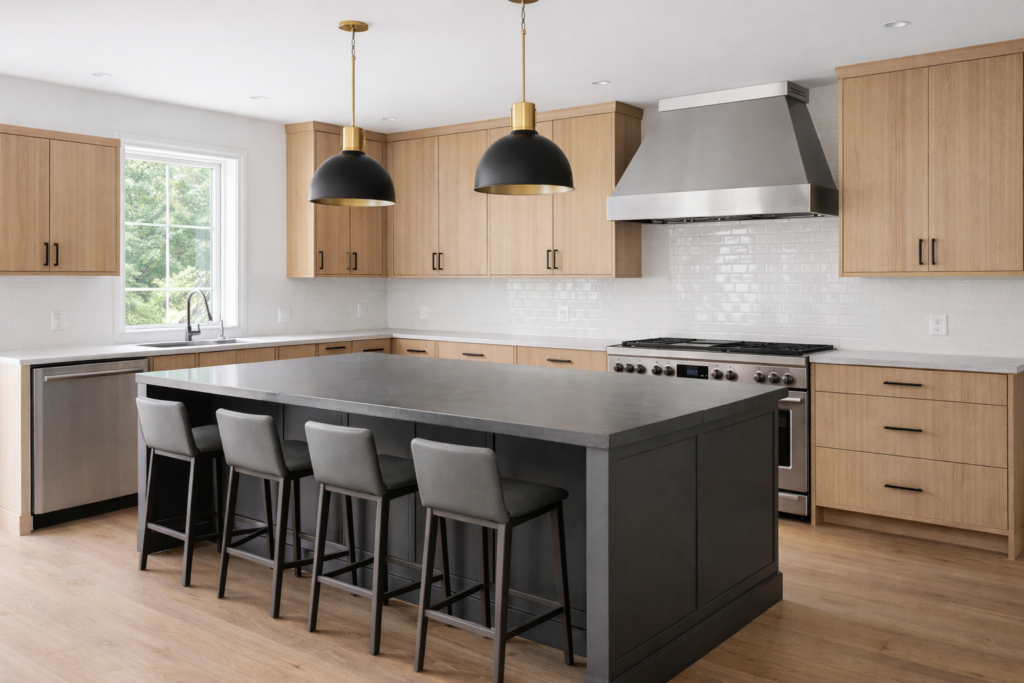
Kitchen renovations deliver 72-96% ROI depending on scope. Minor kitchen remodels return 72-96% at resale, while major gut renovations return only 42-54% due to over-customization. The timeline consideration matters equally – kitchen renovations take 6-12 weeks on average, creating extended disruption to meal preparation and family gathering spaces.
Bathroom renovations offer different trade-offs: shorter timelines (3-5 weeks), lower upfront costs ($15,000-$28,000 for midrange remodels), and 54-71% ROI. For households with multiple bathrooms, the disruption remains manageable. Single-bathroom homes face more significant lifestyle challenges during renovation.
Why Structural Spaces Precede Living Areas
The renovation sequence should flow from “wet” to “dry” spaces and from structural to cosmetic. Kitchens and bathrooms involve plumbing, electrical, and often HVAC modifications that affect walls, floors, and ceilings. Completing these first prevents damage to finished living areas.
Consider this sequence for a whole-house renovation:
- Structural repairs (foundation, framing, roof)
- Systems upgrades (electrical panel, plumbing mains, HVAC)
- Kitchen (plumbing, electrical, gas lines established)
- Bathrooms (using kitchen’s established utility pathways)
- Flooring (after all wet work and wall modifications complete)
- Living areas and bedrooms (cosmetic work with minimal dust/disruption)
Timeline Dependencies Between Rooms
Permit approval timelines affect sequencing significantly. Kitchen and bathroom renovations requiring plumbing or electrical modifications need permits that take 2-6 weeks for approval in most jurisdictions. Miami-Dade County’s permitting process runs 3-8 weeks depending on project complexity and current department workload.
Flooring installation should occur after all major construction completes. Installing new hardwood or tile before kitchen demolition guarantees damage from dropped appliances, tool traffic, and construction debris. According to Red House Custom Building’s tips, “flooring is installed after major construction and remodeling work is complete” to avoid protective covering costs and inevitable damage.
Living Situation Considerations During Renovation
Occupied-home renovations extend timelines 15-30% due to daily cleanup requirements, restricted work hours, and access limitations. Detroit News home project analysis shows 73% of homeowners renovating while occupied report kitchen and bathroom projects as most disruptive.
For Miami-Dade and Broward homeowners, seasonal timing affects both cost and comfort. Scheduling major interior work during summer months (when outdoor spaces provide relief from construction zones) costs 5-10% less than winter peak season. Hurricane season (June-November) should be avoided for exterior work due to weather delays and contractor availability constraints.
Key Takeaway: Kitchen-first sequencing works for most homeowners due to high ROI (72-96%) and central household importance, but bathroom-first makes sense for single-bathroom homes. Complete all wet work before flooring installation to avoid damage and rework.
How Much Does Each First Renovation Cost?
Budget allocation for first renovations requires understanding both absolute costs and ROI potential. For those exploring renovate first in my home, this context matters. According to Amerisave’s cost insights, the average cost of remodeling a 1,250-1,600 sq ft house was $52,275 in 2026, but this figure masks significant variation by project type and regional labor costs.
Cost Breakdown for Top 5 First Projects (2026 Data)
| Project Type | Average Cost | ROI at Resale | Timeline |
|---|---|---|---|
| Garage Door Replacement | $3,907 | 268% | 1 day |
| Steel Entry Door | $2,200 | 216% | 1 day |
| Minor Kitchen Remodel | $26,790 | 72-96% | 6-8 weeks |
| Bathroom Remodel | $15,000-$28,000 | 54-71% | 3-5 weeks |
| Manufactured Stone Veneer | $11,000 | 206% | 1-2 weeks |
According to NARI’s analysis, “garage door replacement, with 268% cost recouped” leads all renovation projects for ROI. For Miami-Dade County homes, impact-rated garage doors add hurricane protection while boosting curb appeal.
Detailed Project Breakdowns:
- Minor Kitchen Remodel: $26,790 average
- Cabinet refacing or painting: $4,000-$9,000
- New countertops (quartz): $3,000-$5,000
- Appliance upgrades: $3,000-$8,000
- Backsplash installation: $1,000-$2,500
- Lighting and fixtures: $800-$2,000
- Labor (30-40% of total): $8,000-$11,000
- Bathroom Remodel: $15,000-$28,000 average
- Vanity and sink: $800-$3,000
- Toilet replacement: $300-$800
- Shower/tub surround: $2,000-$6,000
- Tile flooring (100 sq ft): $800-$2,000
- Lighting and ventilation: $500-$1,500
- Labor (40-50% of total): $6,000-$14,000
- Roof Replacement: $5,000-$12,000
- Asphalt shingles (2,000 sq ft): $5,000-$8,000
- Metal roofing (premium): $12,000-$20,000
- Underlayment and ventilation: $1,000-$2,000
- Removal and disposal: $1,000-$2,000
- Miami-Dade HVHZ compliance adds 15-25%
Budget Allocation Percentages
Henderson Properties’ budgeting guide recommends adding “10-30% extra to your budget as a buffer for unexpected costs.” For homes built before 1980, the contingency should reach 25-30% due to hidden issues like asbestos, outdated wiring, and structural unknowns.
A $50,000 total renovation budget might allocate:
- Structural/safety repairs: 30-40% ($15,000-$20,000)
- Kitchen or bathroom: 35-45% ($17,500-$22,500)
- Flooring/paint/cosmetic: 15-20% ($7,500-$10,000)
- Contingency: 10-15% ($5,000-$7,500)
Financing Options for Priority Repairs
Home equity loans averaged 7.5-9.5% APR in early 2026, while HELOCs ranged 8.0-10.5% APR. For projects under $25,000, personal loans (9.5-15% APR) offer faster approval without tapping home equity. FHA 203(k) rehab loans allow financing purchase plus renovation costs in a single mortgage with 3.5% down, particularly valuable for first-time buyers purchasing fixer-uppers in Miami Gardens or Doral requiring immediate structural work.
Key Takeaway: Minor kitchen remodels ($26,790) return 72-96% at resale, while bathroom remodels ($15,000-$28,000) return 54-71%. Allocate 25-30% contingency for pre-1980 homes and prioritize structural repairs before cosmetic upgrades.
Should You Hire Contractors or DIY First Projects?
The DIY versus contractor decision hinges on project complexity, code requirements, and realistic time/skill assessment. This is especially relevant when evaluating renovate first in my home. Certain renovations legally require licensed professionals, while others offer substantial savings for capable homeowners willing to invest time.
Projects Requiring Licensed Professionals
Electrical work requiring permits – panel upgrades, new circuits, major appliance wiring – must be performed by licensed electricians in all 50 states. DIY electrical violations void homeowner insurance and create liability that extends beyond immediate safety risks. According to the National Electrical Code, simple fixture replacement (switches, outlets, light fixtures) is allowed as homeowner work if no new circuits are involved, but anything affecting the service panel requires professional licensing.
Plumbing follows similar restrictions. Gas line work, main water line replacements, and sewer connections require licensed plumbers in all jurisdictions. Simple fixture replacement (faucets, toilets, showerheads) generally falls within homeowner capabilities if no pipe modification is required.
Structural changes – removing load-bearing walls, adding beams, modifying foundations – require structural engineer approval and permits in 48 states. Engineer fees typically run $500-$2,000, required before contractors can pull permits. DIY structural work is almost universally prohibited and creates catastrophic liability if failures occur.
Safe DIY First Projects for Beginners
Interior painting offers the highest DIY savings with lowest risk. Professional interior painting costs $2-$6 per sq ft ($3,000-$8,000 for a 2,000 sq ft home). DIY costs $400-$1,200 in materials but requires 40-80 hours versus 16-24 hours for professionals – a 60-75% cost savings if time is available.
Other beginner-friendly DIY projects include:
- Cabinet hardware replacement: $200-$500 DIY vs. $800-$1,200 contractor
- Light fixture installation (existing boxes): $50-$200 DIY vs. $300-$600 contractor
- Bathroom caulking and grout refresh: $50-$100 DIY vs. $300-$500 contractor
- Landscaping and yard cleanup: $200-$800 DIY vs. $1,500-$3,000 contractor
- Interior door replacement (pre-hung): $150-$300 DIY vs. $400-$700 contractor
Cost Savings Calculation: DIY vs. Contractor
The true DIY savings calculation includes tool purchases, material waste, time investment, and quality differential. A bathroom vanity installation illustrates the trade-offs:
Contractor Installation:
- Vanity and sink: $800
- Professional installation: $400-$600
- Total: $1,200-$1,400
- Timeline: 4-6 hours
- Warranty: 1-year labor guarantee
DIY Installation:
- Vanity and sink: $800
- Tools (if not owned): $100-$200
- Unexpected materials: $50-$100
- Total: $950-$1,100
- Timeline: 8-16 hours (first-time)
- Warranty: None on labor
The $250-$450 savings (18-32%) assumes no major mistakes requiring professional correction. First-time DIYers should budget 2-3× the estimated timeline and expect 70-80% of professional finish quality.
Permit Requirements for Common First Renovations
Miami-Dade County maintains stricter permit requirements than many jurisdictions due to hurricane building codes. Window replacement, roof work, and even some fence installations require permits and inspections. Permit costs typically run $200-$800 depending on project scope, with approval timelines of 2-6 weeks.
Permits Required:
- Electrical panel upgrades
- Plumbing repiping or main line work
- HVAC replacement
- Structural modifications (wall removal, beam installation)
- Window/door replacement (in some jurisdictions)
- Roof replacement (in hurricane zones)
Permits Typically Not Required:
- Interior painting
- Flooring replacement
- Cabinet installation (no plumbing/electrical changes)
- Fixture replacement (like-for-like)
- Landscaping
For homeowners in Miami-Dade and Broward counties navigating complex permit requirements and contractor selection, Fab’s Construction & Remodeling offers licensed, insured services that handle permitting, code compliance, and quality assurance – particularly valuable for first-time renovators unfamiliar with South Florida’s specific building requirements.
Key Takeaway: DIY painting saves 60-75% ($3,000-$8,000 contractor vs. $400-$1,200 DIY) but takes 3-5× longer. Electrical panel upgrades, plumbing repiping, and structural changes legally require licensed professionals – DIY attempts void insurance and create liability.
Common First Renovation Mistakes to Avoid
First-time renovators consistently make predictable errors that inflate costs and extend timelines. Many people researching renovate first in my home find this information valuable. For more details, see Kitchen Plumbing. Understanding these patterns prevents budget-busting surprises and project abandonment.
Over-Renovating for Neighborhood
Installing luxury finishes in starter-home neighborhoods reduces ROI by 15-25%. Zillow’s research on overimproving shows buyers won’t pay premium prices in lower-value markets. The rule of thumb: total renovation costs should not exceed 10-15% of neighborhood median home price unless planning long-term occupancy (10+ years).
A $60,000 kitchen renovation in a neighborhood with $250,000 median home prices represents 24% of property value – well above the sustainable threshold. That same investment in a $500,000 neighborhood (12% of value) aligns with market expectations and recovers more at resale.
Skipping Inspections Before Cosmetic Work
According to Digital Commons research of Home Inspectors, 40% of homeowners who skip pre-renovation inspections encounter surprise costs averaging $8,200 for hidden issues like mold, structural problems, or electrical code violations. Pre-renovation inspections cost $300-$600 but prevent budget-busting discoveries mid-project.
Specialist inspections provide deeper analysis than standard home inspections:
- Structural engineer assessment: $500-$1,000
- Mold testing and inspection: $300-$800
- Electrical system evaluation: $200-$400
- Plumbing camera inspection: $250-$500
For homes built before 1980, asbestos and lead paint testing is mandatory before renovation work begins. Professional asbestos remediation costs $1,500-$3,000 per room, while lead paint remediation runs $8,000-$15,000 for whole-house treatment. DIY work on these materials is illegal in many jurisdictions and creates serious health risks.
Budget Underestimation by Project Type
One Presidential Mortgage’s analysis shows 68% of homeowners exceed renovation budgets by at least 20%, with first-time renovators most at risk. Phased planning reduces overruns to 8-12%. Common underestimation patterns include:
- Ignoring permit and inspection fees (add 5-8% to project costs)
- Underestimating demolition and disposal costs (10-15% of total budget)
- Failing to account for temporary living arrangements during major work
- Not budgeting for furniture/appliance storage during renovation
- Overlooking finish material waste factors (add 10-15% for tile, hardwood)
Scope creep – changing plans mid-project – accounts for 45% of budget overruns. Material price volatility accounts for another 30%. Establishing a detailed scope of work before construction begins and resisting mid-project changes prevents the majority of overruns.
Timeline Red Flags
West Shore Home’s resale guide notes first-time renovators underestimate project timelines by an average of 42%, expecting 6-week kitchens to complete in 3-4 weeks. Common timeline extensions include:
- Permit approval delays: 2-6 weeks beyond expected
- Material backorders: 2-8 weeks for custom items
- Weather delays (exterior work): 1-3 weeks in rainy seasons
- Change orders and scope modifications: 1-4 weeks per change
- Failed inspections requiring rework: 1-2 weeks per occurrence
Living in the home during renovation extends timelines 15-30% due to daily cleanup requirements and restricted work hours. For major projects (kitchen, multiple bathrooms), temporary relocation often proves more cost-effective than extended contractor timelines.
In South Florida, hurricane season (June-November) creates additional timeline risks for exterior work. Scheduling roof replacements, siding installation, or window replacement during this period invites weather delays and contractor availability issues as storms approach.
Key Takeaway: 68% of first-time renovators exceed budgets by 20%+ due to scope creep and hidden issues. Pre-renovation inspections ($300-$600) prevent $8,200 average surprise costs, while 25-30% contingency budgets absorb inevitable overruns in pre-1980 homes.
Sample 12-Month Renovation Timeline
Strategic phasing prevents contractor scheduling conflicts and maintains livable conditions throughout the process. This sample timeline assumes a moderate whole-house renovation addressing structural issues, systems upgrades, and two major rooms.
Months 1-2: Planning and Assessment
- Week 1-2: Hire structural engineer and specialists for inspections
- Week 3-4: Obtain contractor bids for priority repairs
- Week 5-6: Finalize design decisions for kitchen/bathroom
- Week 7-8: Apply for permits, order long-lead materials
Months 3-4: Structural and Systems Work
- Week 9-12: Foundation repairs, roof replacement
- Week 13-16: Electrical panel upgrade, plumbing repiping, HVAC replacement
Months 5-7: Kitchen Renovation
- Week 17-18: Demolition, rough-in plumbing/electrical
- Week 19-22: Drywall, cabinet installation, countertops
- Week 23-24: Appliances, backsplash, final fixtures
Months 8-9: Bathroom Renovation
- Week 25-27: Demolition, plumbing/electrical rough-in
- Week 28-30: Tile work, vanity installation, fixtures
- Week 31-32: Final touches, paint, accessories
Months 10-11: Flooring and Living Areas
- Week 33-36: Hardwood/tile installation throughout
- Week 37-40: Paint all living areas, bedrooms
Month 12: Finishing Touches
- Week 41-44: Landscaping, exterior paint touch-ups
- Week 45-48: Final inspections, punch-list completion
This phased approach allows you to live in the home with minimal disruption, maintains at least one functional bathroom throughout, and sequences work to prevent damage to completed areas.
Key Takeaway: Phase renovations over 12 months to maintain livability: structural work first (months 3-4), kitchen second (months 5-7), bathrooms third (months 8-9), then flooring and cosmetics (months 10-12).
Miami-Dade and Broward County Contractor Requirements
Finding qualified contractors in South Florida requires verifying licenses, insurance, and hurricane code expertise specific to Miami-Dade County’s High Velocity Hurricane Zone requirements. The region’s unique challenges – salt air corrosion, moisture management, and storm preparedness – demand contractors with demonstrated local experience.
License and Insurance Verification
Florida requires state-level contractor licenses for projects over $1,000. Verify active licenses at myfloridalicense.com before signing contracts. Required credentials include:
- State contractor license (active and current)
- $1M+ general liability insurance
- Workers’ compensation coverage (or exemption for small operations)
- Miami-Dade County hurricane certification for impact installations
Permit Costs by Municipality
Permit fees vary significantly across South Florida jurisdictions:
- Miami: $300-$800 typical range for major renovations
- Hialeah: $250-$600 for similar work
- Coral Gables: $400-$1,000 (stricter historic preservation requirements)
- Kendall (unincorporated): $300-$700 through Miami-Dade County
- Fort Lauderdale: $350-$750 typical range
Permit timelines run 3-8 weeks in Miami-Dade County, 2-6 weeks in Broward County, depending on project complexity.
Hurricane Code Requirements Unique to South Florida
Miami-Dade County’s High Velocity Hurricane Zone mandates exceed standard Florida Building Code:
- Impact windows must pass missile impact testing
- Roof installations require specific tie-down methods
- Exterior doors need pressure-rated certification
- Garage doors require wind-load ratings
These requirements add 15-25% to material costs but qualify for insurance discounts of 10-45%. Non-compliant installations void insurance coverage and create resale complications.
Fab’s Construction & Remodeling serves Miami-Dade and Broward counties with comprehensive renovation services addressing both cosmetic upgrades and critical infrastructure repairs. As a locally owned, licensed, and insured contractor, they navigate the region’s complex permitting requirements and building codes that often confuse first-time renovators.
Key attributes that distinguish qualified South Florida contractors:
- Licensed and insured with active state credentials
- Hurricane code expertise and HVHZ certification
- Transparent pricing with detailed written estimates
- Local references in your specific neighborhood
- Permit management and inspection coordination
Key Takeaway: Verify contractor licenses at myfloridalicense.com and confirm $1M+ liability insurance. Miami-Dade permits cost $300-$800 with 3-8 week approval timelines. Hurricane-rated installations add 15-25% to costs but deliver 10-45% insurance savings.
Frequently Asked Questions
How much should I budget for my first home renovation?
Direct Answer: Budget $20,000-$52,000 for first renovations depending on home size and project scope, with 25-30% contingency for homes built before 1980 – learn more at Kitchen Renovation.
Houzz research shows the median homeowner renovation spend reached $20,000 in 2024, while comprehensive remodels of 1,250-1,600 sq ft homes averaged $52,275. Allocate 30-40% to structural and safety repairs, 35-45% to primary living spaces (kitchen or bathroom), and 15-20% to cosmetic improvements. The contingency buffer prevents project abandonment when hidden issues emerge – a pattern affecting 40% of homeowners who skip pre-renovation inspections.
Should I renovate the kitchen or bathroom first?
Direct Answer: Renovate the kitchen first for maximum ROI (72-96%) and household impact, unless you have only one bathroom or the kitchen is already functional.
HomeLight’s upgrade analysis shows kitchen renovations deliver stronger returns and affect daily life more significantly than bathrooms. However, single-bathroom homes face severe disruption during bathroom renovations, making that the logical priority. If budget allows only one project, consider which space creates more daily frustration – a dysfunctional kitchen affects meal preparation, family gathering, and home value more than most bathroom issues.
What home repairs should never be DIY projects?
Direct Answer: Never DIY electrical panel work, gas line plumbing, structural modifications, asbestos/lead remediation, or HVAC installations – all require licensed professionals and permits.
These projects involve life-safety systems where mistakes create fire hazards, gas leaks, structural failures, or toxic exposure. DIY attempts void homeowner insurance, violate building codes, and create liability that extends to future home sales. Licensed professionals carry insurance, pull proper permits, and guarantee work meets code requirements – protections worth the 40-60% cost premium over DIY attempts.
How long does a first major renovation typically take?
Direct Answer: Kitchen renovations take 6-12 weeks, bathrooms take 3-5 weeks, and whole-house projects take 3-6 months including design and permitting.
Timeline estimates should include design phase (2-4 weeks), permit approval (2-6 weeks), and construction. Living in the home during renovation extends timelines 15-30% due to daily cleanup and restricted work hours. First-time renovators underestimate timelines by 42% on average – expect delays from permit processing, material backorders, and weather (particularly for exterior work during South Florida’s hurricane season).
Do I need permits for basic home renovations?
Direct Answer: Permits are required for electrical, plumbing, HVAC, structural, and roofing work in most jurisdictions; cosmetic projects like painting and flooring typically don’t require permits.
Miami-Dade County maintains stricter requirements than many areas – window replacement, fence installation, and even some deck projects require permits due to hurricane code compliance. Permit costs run $200-$800 depending on scope, with approval timelines of 2-6 weeks. Working without required permits creates resale complications, insurance voids, and potential fines of $500-$5,000 when discovered during home sales.
What’s the best ROI for first-time home renovations?
Direct Answer: Garage door replacement delivers 268% ROI, steel entry doors return 216%, and minor kitchen remodels return 72-96% – highest returns come from exterior upgrades and modest interior improvements.
According to PA Realtors’ ROI research, exterior projects consistently outperform interior renovations for ROI. However, ROI calculations assume sound underlying structure – cosmetic upgrades on failing foundations or roofs create false value that disappears during home inspections. Prioritize structural repairs first, then pursue high-ROI cosmetic improvements.
Should I live in my home during the first renovation?
Direct Answer: Live elsewhere during kitchen renovations if possible; bathroom and bedroom renovations are manageable while occupied if you have multiple bathrooms.
Kitchen renovations eliminate meal preparation capabilities for 6-12 weeks, creating significant lifestyle disruption. Temporary relocation costs ($2,000-$5,000 for extended stays) often prove worthwhile versus the stress and contractor timeline extensions (15-30%) caused by occupied-home constraints. Single-room renovations like bathrooms or bedrooms allow continued occupancy with manageable inconvenience.
How do I know if structural work is needed before cosmetic updates?
Direct Answer: Hire a structural engineer ($500-$1,000) if you observe foundation cracks wider than 1/4 inch, sloping floors, sticking doors/windows, or roof sagging.
Pre-renovation inspections by licensed professionals identify hidden issues before cosmetic budgets are committed. Standard home inspections miss 20-30% of critical problems requiring specialist evaluation. For homes built before 1980, budget for asbestos testing ($200-$800), lead paint assessment ($300-$500), and electrical system evaluation ($200-$400) before finalizing renovation plans.
Take the First Step Toward Your Home Renovation
Renovation prioritization follows a clear hierarchy: structural integrity and safety first, essential systems second, cosmetic improvements last. This sequence prevents the costly pattern of installing new finishes over failing infrastructure – a mistake that creates rework, budget overruns, and potential safety hazards.
For Miami-Dade and Broward County homeowners, the priority framework must account for South Florida’s specific demands: hurricane preparedness, moisture management, and salt air corrosion. Foundation repairs, roof replacements, and impact window installations aren’t optional cosmetic upgrades – they’re insurance requirements and code mandates that affect both safety and property value.
The financial case for proper sequencing is straightforward: a $5,000 roof repair prevents $15,000+ in water damage, while foundation issues caught early cost $8,000-$15,000 versus $30,000+ when delayed. Kitchen and bathroom renovations deliver strong ROI (72-96% and 54-71% respectively), but only after confirming the underlying structure is sound.
Budget 25-30% contingency for homes built before 1980, verify contractor licenses and insurance before signing contracts, and resist the temptation to skip pre-renovation inspections to save $300-$600 – that decision costs an average of $8,200 in surprise repairs. For comprehensive guidance on prioritizing renovations in South Florida’s unique climate and building code environment, Fab’s Construction & Remodeling provides licensed expertise in both critical infrastructure repairs and value-adding cosmetic improvements.
Ready to Get Started?
For personalized guidance, visit Fab’s Construction & Remodeling to learn how we can help.