
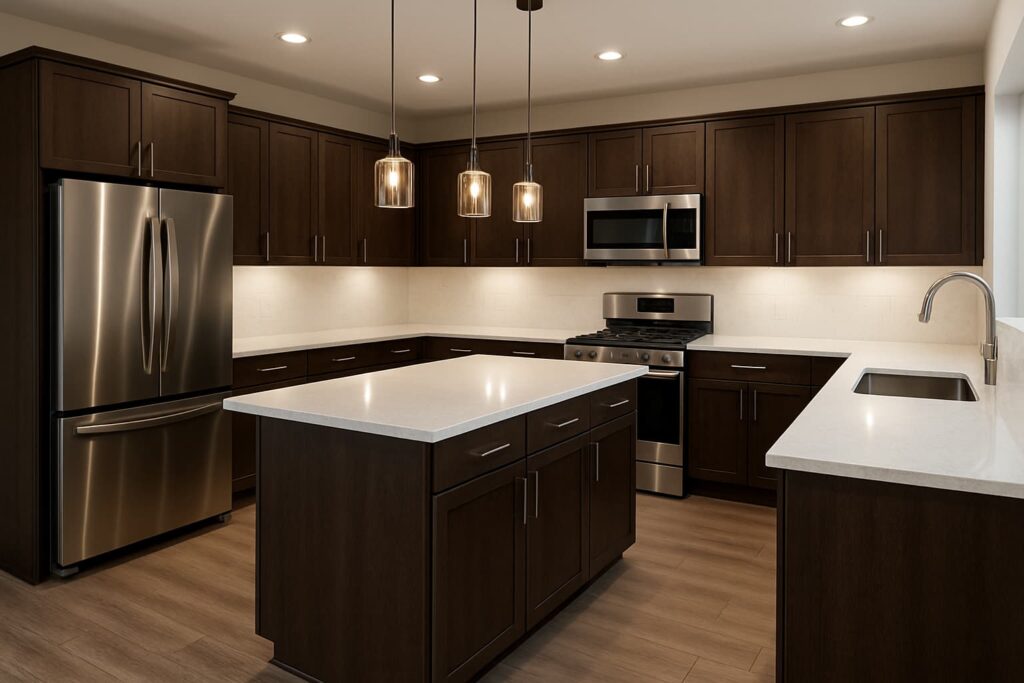
TL;DR: A complete kitchen remodel in Miami takes 8-16 weeks from demolition to final inspection, with an additional 6-10 weeks for permitting in Miami-Dade County. Hurricane season (June-November) can add 2-3 weeks to timelines when storms approach. Budget an extra 15-20% contingency for delays related to concrete block construction, inspector availability, and material shipping to South Florida. Condo owners should add 2-4 weeks for HOA architectural review before construction begins. Many Miami homeowners begin with a kitchen remodel before expanding into larger complete home remodeling projects that modernize the entire property.
How Long Does a Kitchen Remodel Take in Miami?
A kitchen remodel in Miami takes 8-16 weeks once construction begins, but the complete timeline from planning to final inspection stretches 14-26 weeks when you include design, permitting, and material procurement. According to Shuster Design, “A complete home renovation in South Florida takes 6-18 months from initial design consultation through final installation, including 6-10 weeks for design development, 4-8 weeks for permitting, 12-32 weeks for construction, and 4-8 weeks for final furnishing and styling.”
The timeline varies dramatically based on project scope. DF Consulting Services reports that “Most projects take 6 to 12 weeks depending on complexity.” Minor cosmetic updates – cabinet refacing, new countertops, backsplash installation – typically complete in 6-8 weeks. Mid-range remodels involving layout changes, new appliances, and updated electrical/plumbing require 8-12 weeks. Luxury renovations with custom cabinetry, structural modifications, and high-end finishes extend to 12-16 weeks or longer. Many homeowners use kitchen renovations as an opportunity to create open-concept living spaces through room additions or structural redesign.
Miami-specific factors add time that national timeline guides don’t account for. Miami-Dade County’s permit processing averages 6-10 weeks according to Shuster Design – significantly longer than most U.S. jurisdictions due to stringent hurricane codes and high application volume. Concrete block construction, standard in Miami homes built after 1960, requires specialized cutting tools and adds 1-2 days to demolition compared to wood-frame homes. Hurricane season from June through November can halt work for 5-7 days when major storms approach, with material deliveries delayed an additional 1-2 weeks.
Key Takeaway: Plan for 14-26 weeks total timeline in Miami: 6-10 weeks for permits, 8-16 weeks for construction, plus 2-4 weeks buffer for hurricane season delays if starting May-November.
Pre-Construction Phase: Planning and Permits (Weeks 1-10)
The pre-construction phase consumes 6-10 weeks in Miami-Dade County – double the national average – due to Miami’s complex permitting requirements. Shuster Design notes that “Miami-Dade County: 6-10 weeks (longest due to stringent hurricane codes and high volume)” for permit processing. This phase includes design finalization, contractor selection, material ordering, and permit approval.
Design development takes 2-4 weeks for most kitchen remodels. You’ll finalize cabinet layouts, select countertop materials, choose appliances, and specify electrical/plumbing locations. FL Pro Work recommends that “You should pick your tiles, cabinets, and appliances at least 8 weeks before the start date” to avoid delays from material lead times. Custom cabinets require 8-12 weeks from order to delivery, so early selection is critical.
Miami-Dade building permits require detailed construction drawings, electrical plans, plumbing schematics, and product specifications for major appliances. Applications submitted electronically through the county’s BCCO portal process faster than paper submissions. Complete applications with all required documentation move through review in 6-8 weeks; incomplete submissions reset the timeline. Shuster Design mentions that “Express review services: 50-100% premium for 2-3 week processing” are available for urgent projects, though most homeowners opt for standard processing.
Condo and high-rise owners face additional approval layers. HOA architectural review boards typically require 2-4 weeks for application review before county permits can be submitted. Buildings require proof of contractor insurance, elevator reservation coordination, and adherence to construction hour restrictions (typically 8 AM-5 PM weekdays only). These requirements add 2-4 weeks to the pre-construction timeline for Miami Beach, Brickell, and Aventura properties.
Material procurement runs parallel to permitting. FL Pro Work notes that “It usually takes 10 to 14 days for the stone shop to cut your quartz or granite” after templating, which can only occur after cabinets are installed. Order appliances 6-8 weeks before installation to avoid delivery delays. High-end brands like Wolf, Sub-Zero, and Miele popular in Miami’s luxury market often have 8-12 week lead times. Older Miami homes often require broader renovation planning beyond the kitchen alone, especially when updating electrical systems, plumbing, or structural layouts.
Key Takeaway: Allocate 6-10 weeks for Miami-Dade permits plus 2-4 additional weeks for condo HOA approval. Order custom cabinets and appliances 8-12 weeks before construction start to prevent installation delays.
Demolition and Structural Work (Weeks 11-13)
Demolition takes 2-5 days in Miami kitchens, with concrete block construction adding time compared to wood-frame homes common in other regions. Standard demolition – removing cabinets, countertops, appliances, and flooring – requires 2-3 days. Projects involving wall removal or structural modifications extend to 4-5 days due to Miami’s concrete block (CBS) construction requiring specialized masonry cutting equipment.
Most Miami homes built after 1960 use concrete block walls for hurricane wind resistance. Modifying these walls requires concrete saws with diamond blades, rotary hammers, and proper dust containment – equipment and techniques that add 1-2 days compared to cutting wood studs. Structural modifications to load-bearing CBS walls require engineering approval and temporary support during work, adding complexity and time.
Rough-in work for electrical, plumbing, and HVAC follows demolition and takes 3-5 days. Older Miami homes often require electrical panel upgrades to support modern appliance loads, adding 1-2 days to the timeline. Plumbing relocations in concrete slab foundations require cutting the slab with concrete saws – a noisy, dusty process that takes longer than working with accessible crawl spaces or basements found in other climates.
Miami-Dade requires inspection after rough-in work before proceeding to drywall and finishes. Inspection scheduling adds 3-7 business days depending on inspector availability and geographic area within the county. Online scheduling through the county portal (miamidade.gov/permits/inspections.asp) allows self-service booking, typically securing appointments within 3-5 business days for requests submitted by 3 PM.
Living arrangements during demolition require planning. Most homeowners stay in their homes during kitchen remodels, setting up temporary kitchens in garages, dining rooms, or outdoor spaces. Expect dust, noise from 8 AM-5 PM weekdays, and limited access to the kitchen area. Contractors should seal off the work zone with plastic sheeting and provide daily cleanup, though fine dust inevitably spreads throughout the home. Homeowners planning multiple renovations often combine kitchens, bathrooms, flooring, and interior upgrades into a single remodeling timeline to reduce long-term disruption.
Key Takeaway: Budget 2-5 days for demolition (longer for concrete block wall modifications) plus 3-5 days for rough-in work. Add 3-7 days for inspection scheduling before proceeding to installation phase.
Installation Phase: Cabinets, Counters, and Fixtures (Weeks 14-18)
The installation phase consumes 4-6 weeks and includes cabinet installation, countertop fabrication and installation, flooring, backsplash, appliances, and finish work. This phase is most vulnerable to delays from material availability, subcontractor scheduling, and Miami’s high humidity affecting cure times.
Cabinet installation takes 3-5 days for standard kitchens according to Sweeten. Professional installers level cabinets, secure them to walls (drilling into concrete block requires specialized anchors), install hardware, and make final adjustments. Custom European cabinetry popular in Miami’s luxury market may require specialized installers familiar with frameless construction, potentially adding 1-2 days.
Countertop installation follows a two-step process. After cabinets are installed, fabricators visit for templating – creating precise measurements for stone cutting. FL Pro Work reports that “It usually takes 10 to 14 days for the stone shop to cut your quartz or granite” after templating. Installation takes 1 day for most kitchens. This 10-14 day gap between cabinet installation and countertop installation is a common timeline bottleneck.
Flooring installation timing depends on material type. Tile installation takes 2-3 days including setting, grouting, and sealing. Hardwood and engineered flooring require 3-7 days acclimation to Miami’s climate before installation to prevent expansion/contraction issues. Miami’s average relative humidity of 75-85% exceeds the 50-60% ideal range for wood flooring, making proper acclimation critical. Most Miami homeowners choose porcelain tile or luxury vinyl plank to avoid humidity-related flooring problems.
Miami’s humidity extends drying times for paint, drywall mud, and adhesives by 3-7 days compared to drier climates. Paint manufacturers recommend applying water-based paints in environments below 70% relative humidity, but Miami regularly exceeds this threshold. Professional contractors use dehumidifiers during finish work to accelerate curing and prevent paint adhesion failures and mildew growth. This adds equipment costs and extends the finish work timeline.
Appliance installation occurs after countertops are in place. Coordinate delivery timing carefully – appliances delivered too early require storage, while late deliveries delay project completion. Sweeten notes that “Appliance packages in 2025 can range from under $6,000 to upwards of $12,000 or more” with high-end brands often having 6-8 week lead times. Installation takes 1 day for most kitchens.
Key Takeaway: The installation phase takes 4-6 weeks with a critical 10-14 day gap between cabinet installation and countertop installation. Miami’s humidity adds 3-7 days to paint and finish work requiring dehumidification for proper curing.
What Delays Your Miami Kitchen Remodel Timeline?
Hurricane season from June through November is Miami’s most significant timeline risk factor. When major tropical systems approach South Florida, construction halts for 5-7 days for storm preparation and recovery. Contractors secure jobsites, cover openings with plywood, remove scaffolding, and protect materials – requiring 1-2 days before the storm and 1 day cleanup after. Material deliveries to South Florida stop 3-5 days during active storm systems, with building supply yards closing 2-3 days before and after major storms.
Projects starting in May or early June face the highest risk of hurricane delays during construction. FL Pro Work recommends that “we suggest every homeowner add a ‘Buffer Week’ to their calendar” and notes “If you plan for an 11-week project instead of 10, you will feel much less stressed if a small delay happens.” For projects starting during hurricane season, add a 2-3 week buffer to account for potential storm impacts.
Material shipping delays to South Florida add 5-10 days compared to projects in the Southeast or Midwest. Florida’s peninsula location means most construction materials travel farther from distribution centers. Custom products – European cabinetry, imported tile, specialty appliances – face even longer lead times. Custom Kitchens by Lopez reports that “Custom cabinets: 8-12 weeks from order to delivery” which is 2-4 weeks longer than stock cabinets.
Inspector availability in Miami-Dade varies by season and geographic area. Final inspection scheduling adds 3-7 business days, with longer waits during peak construction season (October-April when weather is ideal). Inspections that fail require corrections and re-inspection, adding 5-10 days to the timeline. Common failure points include improper electrical grounding in older homes, plumbing code violations, and inadequate ventilation for gas appliances.
Contractor scheduling conflicts are a leading cause of delays in Miami’s competitive remodeling market. Subcontractors – electricians, plumbers, tile installers – often juggle multiple projects. A delay on another jobsite cascades to your project. Custom Kitchens by Lopez notes that “DIY projects or multiple separate contractors typically take 50-100% longer” than working with a full-service general contractor who coordinates all trades.
When evaluating contractors for timeline reliability, look for licensed professionals with established Miami-Dade track records. Shuster Design notes that “General contractors must hold state licenses for projects exceeding $50,000.” Verify licenses through the Florida Department of Business and Professional Regulation. Local providers like Fab’s Construction & Remodeling demonstrate what to look for in a qualified contractor – proper licensing, insurance, and familiarity with Miami-Dade’s specific permitting and construction requirements.
Key Takeaway: Add 2-3 weeks to timelines for projects starting May-November to account for hurricane delays. Material lead times to South Florida add 5-10 days, and inspector scheduling adds 3-7 days to completion.
Final Inspections and Project Closeout (Weeks 19-20)
The final phase takes 1-2 weeks and includes final inspection, punch list completion, and permit closure. This phase is often underestimated in timeline planning but is critical for legal occupancy and future property transactions.
Final inspection scheduling adds 3-7 business days depending on inspector workload. Miami-Dade’s online portal (miamidade.gov/permits/inspections.asp) allows self-scheduling for most residential inspections. Inspectors verify that all work complies with approved plans and building codes, checking electrical connections, plumbing fixtures, ventilation systems, and structural modifications. Common issues that delay final approval include missing GFCI outlets near water sources, improper range hood venting, and inadequate clearances around appliances.
Punch list completion takes 3-7 days after final inspection. FL Pro Work notes that punch lists typically include “minor touch-ups, adjustments, and corrections identified during walkthrough.” Common items include cabinet door adjustments, grout touch-ups, paint corrections, and hardware tightening. Contractors should complete punch list items within 3-5 days, though scheduling conflicts can extend this to a week.
Certificate of Completion is issued after final inspection approval and all corrections are complete. This document officially closes the building permit and updates property records. The certificate is required for property sales, refinancing, and insurance claims. Keep this document with your home’s permanent records – future buyers will request it during due diligence.
Final payment timing varies by contract terms. Most contractors require 90% payment before final inspection, with the final 10% due after punch list completion and certificate issuance. Never make final payment before receiving the Certificate of Completion and verifying all punch list items are complete. This final payment leverage ensures contractor responsiveness for any remaining issues.
Warranty documentation should be collected at project closeout. Manufacturers provide warranties on cabinets (typically 1-5 years), countertops (10-25 years for stone), appliances (1-2 years), and other materials. Contractors should provide workmanship warranties (typically 1-2 years) covering installation quality. File all warranty documents together with your Certificate of Completion for easy reference.
Key Takeaway: Budget 1-2 weeks for final inspection (3-7 days scheduling), punch list completion (3-7 days), and Certificate of Completion issuance. Withhold final payment until all items are complete and certificate is issued.
Recommended Local Kitchen Remodeling in Miami
Finding a reliable contractor who understands Miami’s unique construction challenges – concrete block modifications, hurricane code compliance, humidity management – is critical for staying on timeline. When evaluating contractors, prioritize those with:
- Active Florida state contractor license (required for projects over $50,000) verified through the Department of Business and Professional Regulation
- Miami-Dade permit experience demonstrated by completed projects with closed permits in the county system
- Concrete block construction expertise using proper tools and techniques for CBS wall modifications
- Hurricane season protocols including jobsite securing procedures and storm delay communication
- Established subcontractor relationships ensuring reliable scheduling for electrical, plumbing, and specialty trades
Fab’s Construction & Remodeling serves Miami-Dade County homeowners with comprehensive kitchen remodeling services. As a locally-owned contractor familiar with Miami’s permitting requirements, concrete block construction, and hurricane season challenges, they provide realistic timeline estimates that account for South Florida’s specific factors. Their experience with both single-family homes and condo projects means they understand HOA approval processes and building-specific requirements that affect timelines.
Working with a contractor who has completed dozens of Miami-Dade kitchen remodels means fewer surprises during permitting, more accurate material lead time estimates, and better coordination with local inspectors. Ask potential contractors for references from recent Miami projects, verify their license status, and confirm they carry adequate insurance for your project scope. A contractor’s track record of completing projects on schedule in Miami is more valuable than generic industry experience from other markets.
Frequently Asked Questions
How much does rushing a kitchen remodel timeline cost in Miami?
Direct Answer: Expediting a kitchen remodel increases costs by 15-25% through premium material sourcing fees, contractor overtime charges, and express permit processing.
Shuster Design notes that “Express review services: 50-100% premium for 2-3 week processing” for Miami-Dade permits. Contractors charge 20-30% overtime premiums for weekend and evening work. Expedited material shipping adds $500-$2,000 depending on order size. Most contractors discourage rushing timelines as compressed schedules increase error rates and reduce quality control time.
Can you remodel a kitchen during Miami hurricane season?
Direct Answer: Yes, but add 2-3 weeks buffer to timelines for potential storm delays when major systems approach South Florida between June and November.
Construction continues normally most days during hurricane season. Work halts only when tropical storm watches or warnings are issued for South Florida – typically 5-15 total days per season. Contractors secure jobsites 1-2 days before storms and resume work 1 day after. Material deliveries experience 1-2 week delays during active storm systems. Projects starting in May or early June face highest risk of hurricane delays during construction.
What happens if my contractor misses the timeline?
Direct Answer: Review your contract’s timeline provisions – most include force majeure clauses exempting contractors from weather delays and material shortages beyond their control.
Contractor-caused delays (poor scheduling, inadequate staffing, failure to order materials) may entitle you to compensation if specified in your contract. Document all delays with photos and written communication. For significant delays, consult with a construction attorney before withholding payment, as improper withholding can breach your contract. Custom Kitchens by Lopez reports that “95% of our projects complete within the quoted timeline” when working with experienced contractors.
How long do Miami-Dade kitchen permits take to approve?
Direct Answer: Miami-Dade County kitchen remodel permits average 6-10 weeks for complete electronic applications, significantly longer than most U.S. jurisdictions.
Shuster Design reports that “Miami-Dade County: 6-10 weeks (longest due to stringent hurricane codes and high volume)” for permit processing. Complete applications with all required documentation (construction drawings, electrical plans, plumbing schematics, product specifications) process faster than incomplete submissions. Express review services cost 50-100% premium and reduce processing to 2-3 weeks but are typically reserved for urgent projects.
Should I live in my home during a kitchen remodel?
Direct Answer: Most homeowners stay in their homes during kitchen remodels by setting up temporary kitchens in garages, dining rooms, or outdoor spaces.
Expect dust, noise from 8 AM-5 PM weekdays, and limited kitchen access for 8-16 weeks. Contractors should seal work zones with plastic sheeting and provide daily cleanup. Set up a temporary kitchen with a microwave, toaster oven, portable induction cooktop, and mini-fridge. Miami’s warm climate allows outdoor cooking on grills or portable burners. Budget $150-$300/week for increased restaurant meals and prepared food from local options like Publix deli counters or Whole Foods hot bars.
What’s the fastest possible kitchen remodel timeline?
Direct Answer: The absolute minimum timeline is 8-10 weeks for a minor cosmetic remodel with no layout changes, using stock cabinets and standard materials.
Cipriano Properties reports that “Mid-Range Kitchen Remodel: 6–10 weeks” is achievable with ideal conditions. This requires pre-ordering all materials, having permits approved before construction starts, perfect inspector availability, and no weather delays. Most contractors recommend adding 15-20% buffer time per Custom Kitchens by Lopez: “Establish firm budget with 15-20% contingency.” Rushing timelines increases error rates and reduces quality control time.
How does kitchen size affect remodel timeline?
Direct Answer: Kitchen size affects timeline by 1-2 weeks – a 100 sq ft galley kitchen remodels 2-3 weeks faster than a 300 sq ft open-concept kitchen.
Larger kitchens require more cabinets (adding 1-2 days installation), more countertop area (adding 1 day fabrication/installation), more flooring (adding 1-2 days), and more electrical/plumbing work (adding 1-2 days). However, the permit timeline, material lead times, and inspection scheduling remain constant regardless of size. A small kitchen might complete in 8-10 weeks while a large kitchen takes 10-12 weeks – a relatively modest difference compared to scope and complexity factors.
When should I order appliances for my kitchen remodel?
Direct Answer: Order appliances 6-8 weeks before planned installation date to account for delivery lead times and avoid project delays.
notes that “Appliance packages in 2025 can range from under $6,000 to upwards of $12,000 or more” with high-end brands requiring longer lead times. Wolf, Sub-Zero, and Miele popular in Miami’s luxury market often have 8-12 week lead times. Stock brands like GE, Whirlpool, and Samsung typically ship within 2-4 weeks. Coordinate delivery for 1-2 days after countertop installation to avoid storage issues and ensure appliances fit properly in their designated spaces.
Ready to Get Started?
For personalized guidance, visit Fab’s Construction & Remodeling to learn how we can help.
Conclusion
A realistic kitchen remodel timeline in Miami spans 14-26 weeks from initial planning through final inspection: 6-10 weeks for permits, 8-16 weeks for construction, and 1-2 weeks for closeout. Miami-specific factors – concrete block construction, hurricane season delays, high humidity affecting cure times, and lengthy permit processing – add 3-6 weeks compared to national averages.
Success requires early material ordering (8-12 weeks for custom cabinets), realistic timeline buffers (15-20% contingency), and experienced contractors familiar with Miami-Dade’s requirements. Projects starting May-November should add 2-3 weeks for potential hurricane delays. Condo owners need an additional 2-4 weeks for HOA architectural review.
For homeowners ready to start their kitchen remodel, Fab’s Construction & Remodeling provides experienced guidance through Miami’s unique permitting and construction challenges, helping you set realistic expectations and avoid common timeline pitfalls. If your kitchen renovation is part of a larger vision for your property, our team also specializes in complete home remodeling throughout Miami’s most sought-after neighborhoods